James T. Daniel
Chesapeake Bay Maritime Museum, Uncurated Search Results
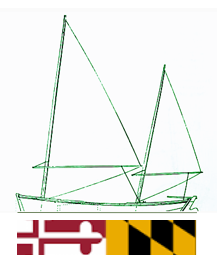
Type: Bugeye
Year: 1882
Builder:
Location: Monie
These records are found in the collection of the Chesapeake Bay Maritime Museum in St. Michaels, Maryland. Uncurated search results are presented to give researchers and interested readers an idea of whether CBMM’s archives contain information about this vessel and whether it may be worthwhile to contact CBMM for further investigation. Uncurated results may be inaccurate or incomplete.
For more information about these items, contact the CBMM curator at collections@cbmm.org, or use the selection buttons below to submit a research request.
Search mode: Exact Name. Search phrase(s): "James T. Daniel"; "James T Daniel". Results returned: 5. Results displayed in this table: 5.
Use these buttons to send uncurated search results to your own app or text document for further research. First, check the box for any row, or click "Select All" then uncheck any rows. Then click "Show Selections". You can then copy your selections from the text box and past them into your app.
| Fetch? | Row ID | Catalog # | Object Name | Title | Artist/Maker | Date Made | Place Made | Description | Full Image | CBMM Cat. Page |
|---|---|---|---|---|---|---|---|---|---|---|
| 1 | 8888.0016.0000.00 | documents | Albert E. Brown and Bro Papers<CR><CR>The collection i | Brown, Albert __Creator | Exact 02/01/1988 - | Albert E. Brown and Bro Papers<CR><CR>The collection is comprised of some of the correspondence and business papers concerning the Brown's Sail Loft in Winona, Maryland. Included are many sail plans for work and recreational boats. These papers were retrieved by museum staff from the derelict sail loft with the permission of the owner. Many are damaged or, deteriorated.Biographical BackgroundAlbert E. Brown and Bro/ sail.1oft~:~was located at Wenona, on the southern tip of the island. The Loft was founded in 1870 by Capt. John Stubbs. In 1890 he was bought out by Henry Brown, born in England, and who served as a seaman in the Royal Navy. He learned the art of sailmaking when he came to the United States during the Civil War and joined the United States Navy.Henry constructed the present building. When he retired in 1919 his son Albert took over the sail loft. Albert's son Henry, in turn, started at the loft when he was 12 years old and took over the business in 1956. Henry G. Brown retired about 1980 and the building has stood empty ever since. In 1986 the old sail loft changed hands.In its heyday, the business was one-of the region's leading sailmakers and had a reputation for old-fashioned, quality workmanship. Orders for sails came from all across the country and from overseas.Scope and ContentThis material represents those papers that were salvagable and that remained in the sail loft after the business had closed. They give considerable insight into the operation of one of the country's most well-known sailmakers.The majority of the papers are correspondence written to the sail loft concerning orders for sails, frequently accompanied by a sail plan and an estimate. Of value are a number of sail plans for the oyster dredging fleet, that the loft kept on file for repeat orders, and letters concerning well-known Bay yachts. Many of these boats have long since disappeared. Sail Loft Amps (1923 - 1974)Brown Papers, p 2An index of boats is available.Correspondence was filed under boat name where it was known, and by correspondent's last name if-no specific boat was mentioned (except for one" design boats which are filed under class name).Other papers include"account books and miscellaneous business papers which provide an overview of 1"the finances of a traditional sailmaking business.Sub'ectsSailmaking Subject: Albert E. Brown and Bro. | No image URL. | View | ||
| 2 | 8888.0087.0000.00 | documents | H. M. Rowe & Co., Oyster Packers:BackgroundI | Range, Cir 03/01/1882 - 07/31/1887 | H. M. Rowe & Co., Oyster Packers:BackgroundIn 2001 the museum purchased four large, leatherbound books consisting of volumes labeled "Ledger", "Journal", "Cash", and "H. M. Rowe & Co." The latter contained no readable entries. The Journal contained entries from 1 March 1882 through 31 August 1885; Cash had entries from 1 September 1885 through 16 July 1887; and the Ledger covered the period from 1884 through July 1887.Wood's Baltimore City Directory, 1874 (Baltimore: John W. Woods), at p. 492, lists "Rowe, H. M. & Co (H. M. & W. H. Rowe) oyster packers, 68 Boston". Also, H. M. Rowe is listed at "393 e Pratt", and Wm. H. Rowe is listed at "395 e Pratt". Finally, James B. Rowe, bookkeeper, is listed at "393 e Pratt". From this it is evident that the Rowe company was in the oyster packing business as early as 1874. Information contained in the three volumes suggests that the company ended its business in July 1887. Polk's Baltimore City Directory, 1902, has no listing for the company.In 1882 Joseph W. Brooks (1832-1915) built a schooner named H. M Rowe at his yard in Dorchester County, MD. (See Pete Lesher, "The Industrious Shipbuilder: Joseph W. Brooks" (The Weather Gauge, v. 36, No. 1, Spring 2001, pp. 3-11 and 33). A photo at p. 7 shows the Rowe with her homeport as Deals Island. The vessel's first owner was Caleb J. Moore whose connection with the Rowes is not known. As shown below, however, the Rowe company purchased oysters from the vessel over several years.Scope and ContentThe Journal and Cash volumes reflect receipts and disbursements over a five-year period. Many of the disbursements were small amounts to the three Rowes; many others were to named recipients or for such expenses as stamps, labels, etc.The Journal (pp. 1-239) is of interest because it shows on a day-by-day basis all receipts and disbursements from 1 March 1882 through 31 August 1885. Disbursements cover everything from postage stamps, newspaper purchases (New York Herald, Baltimore American), payments to the Rowes and their employees, to payments for oysters delivered by ships. Among many vessels to which payments were made were the sloop Morning Light, and schooners Sea Belle, Sharps Island, Nautilus, Exchange, H. P. Barnes, Maid of Erin, Ann Virginia, Two Brothers, and Lewis Taulane. Of special are payments to the schooner H. M Rowe. These began on 6 October 1882 with the entry (p. 45) showing a payment of $50.00, and the entry "name & colors". Subsequent entries show payments to the vessel throughout the years 1882 until 19 January 1885. Most payments were for relatively large amounts apparently for cargos of oysters: examples are payments of $315.00 on 8 December 1882 (p. 61), $511.56 on 27 December 1882, and $455.05 on 11 January 1883.However, the key portion of the collection is contained in the Ledger. Between pages 70 and 261 the entries show shipments of oysters to numerous buyers in a variety of states and Ontario, Canada. Each entry shows the date of shipment, the quantity shipped (barrels, half-barrels, kegs, tubs), the grade of the shipment(standards, selects), the price of the shipment, and the payment dates and amounts, almost always in cash. The Ledger also shows that each of the Rowes owned one-third of the value of the assets of the company (pp. 4-5), but that H.M. Rowe held the most capital (pp. 30-43). Although the Rowes were all partners in the firm, we do not know what their relationship was to each other.A second important part of the Ledger reflects payments for merchandise to numerous individuals and companies (pp. 301-329).In short, although this company was only one of many oyster packers and shippers in Baltimore during the period covered by these volumes, clearly its business was widespread and apparently lucrative: when the company apparently wound up its business on 16 July 1887, the total capital split among the Rowes was about $21,665, a fair amount for the time. | No image URL. | View | |||
| 3 | 1994.0007.0001.00 | oil paintings | Painting of the "Gloucester" by Otto Muhlenfeld, a | Muhlenfeld, Otto __Artist | Exact 01/01/1896 - | Painting of the "Gloucester" by Otto Muhlenfeld, a merchants & miners steamship Condition: good. | 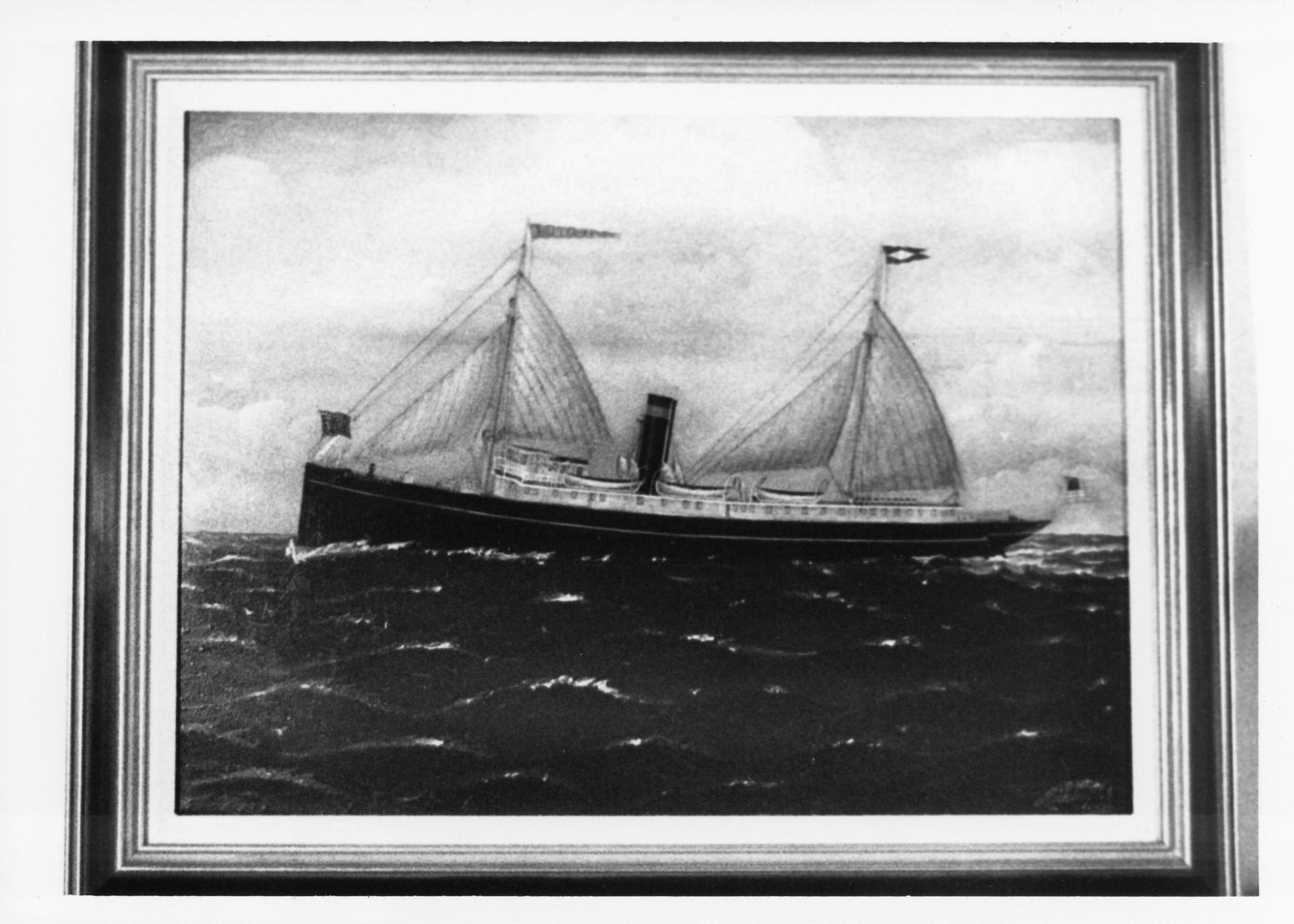 | View | ||
| 4 | 8888.0101.0000.00 | papers | Papers of Constance S. Larrabee | The material in this collection was acquired in a donation from Constance Stuart Larrabee. Constance Stuart was born in England in 1914 and sailed with her parents to South Africa in the same year. She reseived her first camera, a Kodak No. 0 Box Brownie, at the age of ten, and was captivated by the medium. She studied photography in London and Munich. In 1944, she was South Africa's first woman war correspondednt serving in WWII. Her mission in Egypt was to document the acitvities of the South African Sixth Armored Division. Although her assignment was only to last six weeks, she turned it into an extended odyssey that took her to the front lines in Italy and Southern France, to areas just liberated from Axis rule, including Rome and Paris, and to war-torn London, where the menace of the V-2 rockets was ever present. Her photographs, stark, realistic, and compelling, proide a unique insight into World War II and its aftermath. Consatnce came to America in 1949 when she married Colonel Sterling Larrabee and moved to Chestertown on the Eastern Shore in 1950. She became an American citizen in 1953. Much of her Eastern Shore life centered at King's Prevention Kennel, where she bred over 600 Norwich and Norfolk terriers. Constance bred and trained not merely pets, but champions. An acknowledged expert on the breed, she co-edited Norwich Terrier USA 1936-1966 for the Norwich Terrier Club, USA. Ever concerned with her puppies' well-being, she permitted adoption only after she had carefully screened the prospective owners.Though very involved in breeding champion terriers, she also understood the importance of being involved with her community. The Chestertown Garden Club, the Humane Society of Kent County, the Chestertown Arts League, the Kent County Arts Council, and Washington College were some of the beneficiaries of her boundless energy and inspiration. In 1955 two of her photographs were selected by Edward Steichen to be included in The Family of Man exhibition at the Museum of Modern Art in New York. She has since exhibited internationally and has work in leading museum collections, including the Corcoran Gallery of Art and the National Museum of African Art.[compliled from several sources in the collection by Lynne Phillips]Scope and ContentThe items in this collection are organized by subject. Exhbition paraphernalia, articles and press releases, correspondance, CBMM meterials, Agency 154 Paris France 1995 documents, tributes and memorials, and miscellaneous | No image URL. | View | ||||
| 5 | 2003.0038.0001.00 | soap (organic material) | A bar of Colgate's Octagon all purpose soap, net w | Colgate-Palmolive Company, __Manufacturer | Range, Cir 01/01/1945 - 01/01/1946 | A bar of Colgate's Octagon all purpose soap, net wt. 7 oz. (198g), made by Colgate-Palmolive Company, New York, NY 10022, Made in U.S.A. Soap is from the Center Market in Cambridge, Maryland, the type that the donor sold to skipjack crews in the 1930's and 1940's. This one is post 1964 and is marked .79. The package is white with red stripes and black text. | 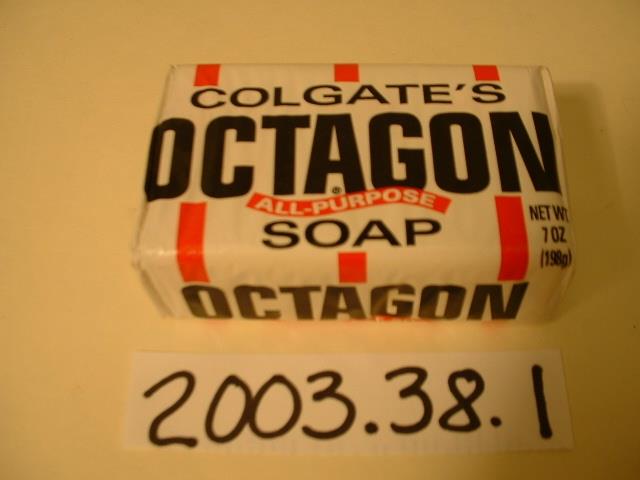 | View |
Created 2026 by Don Barker, CBMM volunteer, for the Chesapeake Shipbuilding Project. shipbuilding@sailingworkboats.es